
Cheeses of Puglia: The Complete Guide to Traditional Apulian Cheese

Updated: Nov 8
Puglia is celebrated for its olive groves, handmade pasta and sun-drenched countryside. But its dairy traditions are just as compelling. From delicate fresh cheeses to firm, mature varieties, the cheeses of Puglia tell the story of rural communities, skilled cheesemakers and the region’s enduring connection to food.
Think of burrata with its creamy center, the gentle texture of fresh mozzarella, the savory depth of aged caciocavallo and the distinctive character of Canestrato Pugliese. Each cheese has its own place at the Apulian table, and each deserves to be understood on its own terms.
This guide explores traditional Apulian cheeses, how they are made, how they differ, what to taste and how to discover the region’s dairy culture while visiting Puglia.
Why Is Puglia Famous for Its Cheese?
Cheesemaking in Puglia grew from everyday agricultural life. Milk from cattle, sheep and goats could be transformed into fresh food for immediate enjoyment or into cheeses that would mature over time. These practices developed alongside the region’s farming and pastoral traditions.
A tradition shaped by the countryside
Traditional cheeses mature on shelves and wooden supports in an Apulian dairy.
Traditional cheeses mature on shelves and wooden supports in an Apulian dairy.
Across northern Puglia, the Valle d’Itria and Salento, dairies and farms reflect local habits and techniques. Fresh stretched-curd cheeses, sheep’s-milk cheeses and aged varieties offer different expressions of this heritage. There is no single ‘Apulian cheese’: the richness lies in the diversity.
Why the milk and method matter
Milk type, curd handling, salting, smoking and maturation all influence the final cheese. Stretching hot curd creates the supple texture associated with mozzarella and caciocavallo, while other methods yield softer, crumbly or firmer cheeses. Even within the same family, a fresh cheese and an aged version may taste strikingly different.
Cheese at the Apulian table
Cheese in Puglia is often enjoyed simply: fresh burrata with tomatoes and extra virgin olive oil, ricotta with seasonal vegetables, or mature cheese alongside bread and a glass of local wine. The pleasure comes not only from the ingredient but from its freshness, provenance and the occasion of sharing it.
The Main Families of Traditional Apulian Cheese
To appreciate Puglia’s cheese culture, it helps to distinguish major families from individual shapes, sizes and maturation styles. A dairy may offer several versions of the same cheese, but that does not always make each one a separate traditional type.
Fresh stretched-curd cheeses
Mozzarella and fior di latte, along with nodini, bocconcini, trecce and other shapes, are valued for their soft texture and fresh milky flavor. Their names can describe the form or size as much as a different cheesemaking tradition.
Creamy fresh specialties
Burrata and stracciatella are among Puglia’s best-known dairy pleasures. Burrata has an outer casing of stretched curd surrounding a creamy filling; stracciatella refers to the mixture of torn strands of cheese and cream that gives the filling its character. Burrata di Andria IGP has a protected geographical indication, which should not be confused with every product sold simply as burrata.
Scamorza and caciocavallo
Scamorza may be enjoyed fresh, smoked or after some maturation. Caciocavallo can also range from relatively young and mild to more intensely aged. Cave ageing is a maturation method used by some producers, not a separate cheese family in itself.
Harder cheeses and traditional ricottas
Canestrato Pugliese, pecorino, cacioricotta and different ricotta preparations broaden the picture beyond stretched-curd cheeses. The distinctions matter: Canestrato Pugliese DOP is not interchangeable with every cheese sold as canestrato, and ricotta forte is very different from fresh ricotta.
Fresh Cheeses of Puglia: Mozzarella, Burrata and Beyond
Few foods capture the pleasure of eating in Puglia as immediately as fresh cheese. Often made in the early hours and enjoyed the same day, these specialties celebrate the texture and delicate flavor of milk rather than the intensity that comes with long maturation.
Many belong to the pasta filata family, or stretched-curd cheeses. After the curd has developed the right acidity, cheesemakers work it with hot water until it becomes elastic, then shape it by hand or with suitable equipment. The result can be a ball, a knot, a braid or a casing filled with cream.
Mozzarella and Fior di Latte: What Is the Difference?
In Puglia, fresh cow’s-milk mozzarella is often called fior di latte. The term helps distinguish it from buffalo-milk mozzarella, although everyday usage varies. Fior di latte is appreciated for its gentle milky flavor, moist interior and springy but tender bite.
Good fresh mozzarella should taste clean and balanced, without excessive sourness. It can be eaten on its own, with ripe tomatoes, in a salad or alongside local bread. Its subtle flavor is best appreciated when it is not overwhelmed by heavy dressings.
Nodini, Bocconcini, Ciliegine and Trecce
A visit to an Apulian dairy reveals how one cheesemaking technique can produce many recognizable shapes. Nodini are small knots of stretched curd; bocconcini are bite-sized pieces; ciliegine are smaller, cherry-sized balls; and trecce are braided strands.
These names often describe size and shape rather than entirely different cheeses. Their proportions change the eating experience: a small bocconcino offers a different balance of surface and moist interior from a larger braid. They are popular on antipasto platters and at family tables because they are easy to share.
Burrata: Puglia’s Iconic Cream-Filled Cheese
Burrata is one of the region’s most recognizable specialties. Its outer pouch is made from stretched curd, while the inside holds a rich mixture of shredded cheese strands and cream. Cut into a fresh burrata and the filling gently spills onto the plate.
Burrata di Andria IGP is a protected geographical indication with its own production specification. Not every cheese marketed as burrata carries that designation, so the protected name should be used precisely.
For a simple Apulian serving, place burrata beside seasonal tomatoes, add a little extra virgin olive oil and serve with crusty bread. Let its creamy character remain the focus rather than adding too many competing ingredients.
Stracciatella: The Creamy Heart of Burrata
Stracciatella is made from thin, torn strands of stretched-curd cheese mixed with cream. It is familiar as burrata’s filling but is also sold and served on its own.
Its spoonable texture works beautifully with grilled vegetables, tomatoes and toasted bread. It can also finish a warm pasta dish, ideally added just before serving so that the creaminess remains distinct.
How to Recognize and Enjoy Fresh Apulian Cheese
Fresh cheeses are at their best when properly handled and consumed within the producer’s recommended period. Ask the dairy how the cheese should be stored and follow the label’s refrigeration and use-by instructions; there is no single rule that fits every product.
When tasting several fresh cheeses, begin with the mildest, such as fior di latte, then move to richer options such as stracciatella and burrata. Notice the aroma of milk, the texture of the curd, the moisture and the balance of salt and cream.
The shapes and names may be numerous, but the common thread is freshness. Visiting a local caseificio offers a chance to see how the same curd can become a knot, braid or ball, and why these everyday foods hold such an important place in Puglia’s culinary identity.
Scamorza, Caciocavallo and Other Matured Cheeses of Puglia
Fresh cheeses are only one side of Puglia’s dairy heritage. Across the region, cheesemakers also produce firmer cheeses whose flavors develop through salting, smoking and maturation. Some are still supple and gently milky; others become compact, savory and intensely aromatic with age.
The same name may appear on cheeses of different ages, sizes or milk types. Rather than treating every variation as a separate traditional cheese, it is more useful to understand the main families and what happens to them over time.
Scamorza: Fresh, Smoked and Matured
Scamorza is a pasta filata cheese, made by stretching curd and shaping it into its characteristic rounded form, often with a narrower neck. In Puglia, it may be sold fresh, smoked or matured for a longer period.
Fresh scamorza tends to have a mild dairy flavor and a soft, elastic bite. As it loses moisture and matures, its texture becomes firmer and its flavor more concentrated. Smoked scamorza, or scamorza affumicata, acquires an additional smoky aroma from the producer’s smoking process.
Scamorza is delicious sliced and warmed until it softens, grilled briefly or paired with seasonal vegetables. The precise texture and flavor depend on the milk, the dairy’s method and the age of the cheese, so ask the producer which version you are tasting.
Caciocavallo: From Young to Fully Aged
Caciocavallo is another important stretched-curd cheese in Southern Italy, recognizable for its hanging shape and the traditional practice of suspending cheeses in pairs during maturation. Puglian dairies produce versions that vary in age, size, milk and intensity.
A younger caciocavallo can be relatively supple, buttery and gentle. Semistagionato versions generally develop a firmer body and a more pronounced savory taste. Longer ageing may produce a drier, more complex cheese, sometimes with a pleasantly sharp finish.
Caciocavallo aged in a cave is not a separate cheese family. It describes a particular maturation environment, which can influence moisture loss and flavor development depending on the conditions and the producer’s practices. It should not be assumed that every cave-aged cheese follows the same method or ageing period.
For a closer look at traditional production, flavors, Podolico heritage and where to taste this cheese in Puglia, read our complete guide to caciocavallo cheese.
Caciocavallo Podolico Dauno
In the Daunia area of northern Puglia, caciocavallo made from the milk of Podolica cattle is associated with local pastoral traditions. Its character reflects the milk, the cheesemaker’s technique and the maturation process. When buying it, look for clear information about origin and producer rather than assuming that every caciocavallo is made from Podolica milk.
Canestrato Pugliese: A Cheese with a Distinct Identity
Canestrato is traditionally associated with the impressions left by baskets or moulds on the rind. In Puglia, different dairies offer canestrato-style cheeses at various stages of maturation, from relatively young to more fully aged.
Canestrato Pugliese DOP is a specific protected cheese governed by its production specification. The DOP designation must not be applied indiscriminately to every cheese marketed as canestrato, including cow’s-milk or mixed-milk versions that do not meet that specification.
A younger canestrato may be easier to slice and gentler on the palate, while a more mature version can offer a firmer texture and deeper savory notes. These are useful tasting distinctions, not universal legal categories for all products sold under the name.
Pecorino and Other Sheep’s-Milk Cheeses
Sheep’s-milk cheeses form another strand of Apulian dairy culture. Pecorino may be enjoyed at different stages of maturation, with flavors ranging from mild and milky to more assertive and salty. Local names and methods vary, so a producer’s explanation is often the best guide to a particular cheese.
Aged pecorino can be shaved over vegetables or pasta, or served in small pieces with bread and a suitable regional wine. Stronger cheeses are best tasted after milder varieties so their flavors do not dominate the whole tasting.
Pallone di Gravina and Manteca
Pallone di Gravina is a traditional stretched-curd cheese associated with the Gravina area and known for its rounded shape. Manteca is another regional specialty, distinguished by a butter-rich interior enclosed in a cheese casing. Both show that Puglia’s dairy heritage extends beyond the most internationally famous products.
How Ageing Changes Texture and Flavor
During maturation, a cheese gradually loses moisture and undergoes changes that affect its texture, aroma and taste. The results depend on many factors, including the milk, salting, size, temperature, humidity and length of ageing. Smoking adds another layer of flavor but should not be confused with ageing itself.
For a balanced tasting, compare young and mature versions of the same cheese family side by side. Notice whether the paste is elastic or crumbly, how the aroma develops and whether the finish is creamy, nutty, salty or piquant. These observations tell you more than a simple label of ‘fresh’ or ‘aged’.
Ricotta, Cacioricotta and Other Traditional Cheeses of Puglia
Not every traditional Apulian dairy specialty is made by stretching curd. Some are delicate and spoonable, others are salted and dried for grating, and a few are deeply rooted in particular towns or household traditions. Understanding how these products differ reveals another side of Puglia’s cheesemaking culture.
Ricotta Fresca: Delicate and Versatile
Ricotta is traditionally made by heating whey left over from cheesemaking, sometimes with added milk, to collect the fine proteins that rise to the surface. Its name refers to the idea of cooking again. Because its production differs from that of most cheeses made directly from curd, ricotta is technically a whey dairy product, although it is commonly grouped with cheeses in shops and kitchens.
Fresh ricotta is soft, moist and mild. Depending on the milk and the producer’s method, it can taste gently sweet, creamy or slightly tangy. In Puglia it appears in savory fillings, simple pasta dishes and desserts, but it is equally satisfying spread on bread.
Ricotta Forte: A Distinctive Apulian Specialty
Ricotta forte, sometimes called ricotta 'scante' in local usage, is a markedly different experience from fresh ricotta. Through a controlled traditional process of maturation and fermentation, it develops a pungent aroma and a strong, piquant flavor. It is typically used sparingly rather than eaten in generous spoonfuls.
A small amount can add character to tomato sauces or be spread thinly on bread for those who enjoy assertive flavors. Because preparation and storage methods vary, follow the producer’s instructions and buy from reputable dairies.
Ricotta Marzotica and Other Salted Ricottas
Ricotta marzotica is associated with springtime dairy traditions in Salento. Compared with fresh ricotta, it is generally firmer and may be salted and allowed to dry, making it suitable for slicing or grating depending on its stage of preparation.
The terms used for salted, dried or mature ricotta are not always interchangeable. Ask how a particular product was made and how it is intended to be served: a soft ricotta and a ricotta meant for grating behave very differently in the kitchen.
Cacioricotta: A Cheese of Its Own
Cacioricotta is a distinct Southern Italian cheese, not a mixture of caciocavallo and ricotta. Its traditional production involves heating the milk before coagulation, helping retain whey proteins in the finished cheese. The result is a cheese with its own texture, flavor and culinary uses.
Apulian cacioricotta is produced in different local versions, including those made with goat’s milk or mixed milk. Young cacioricotta can be eaten as a table cheese; when dried and aged, it becomes firmer and is often grated over pasta.
One of its most evocative uses is over a plate of pasta with fresh tomato sauce. The cheese adds a salty, gently tangy finish without overwhelming the simplicity of the dish.
Giuncata: A Gentle Fresh Dairy Tradition
Giuncata is a soft, fresh dairy preparation whose name recalls the traditional rush baskets or containers once used to shape or drain it. Its delicate texture and mild flavor make it a very different experience from aged pecorino or caciocavallo.
It is best approached simply, allowing the fresh milk flavor to come through. Production methods can differ between dairies, so the texture may range from softly set to more spoonable.
Primo Sale, Caciotta and Local Variations
Primo sale generally refers to a young, lightly matured and salted cheese rather than one single protected Apulian recipe. Caciotta is also a broad name for relatively small cheeses that may be made with different milks and offered plain or flavored with ingredients such as pepper or chili.
These cheeses are worth tasting, but their names alone do not tell you everything about the ingredients, origin or maturation. The producer’s label is the best place to check the milk type and the specific characteristics of each version.
Caprino and Mixed-Milk Cheeses
Goat’s-milk and mixed-milk cheeses add further variety to the Apulian dairy landscape. Their character depends on the animals’ milk, the production method and whether the cheese is served fresh or aged. Rather than assuming all goat’s cheeses are strong, taste them individually: some are delicate, while others are more pronounced.
How to Taste, Pair and Buy Cheese in Puglia
A tasting brings together the contrasts explored throughout this guide: the softness of fresh mozzarella, the creaminess of burrata, the elasticity of scamorza and the concentrated flavor of aged caciocavallo. The order in which you taste them, and what you serve alongside them, can make those differences easier to appreciate.
Build a Traditional Apulian Cheese Tasting
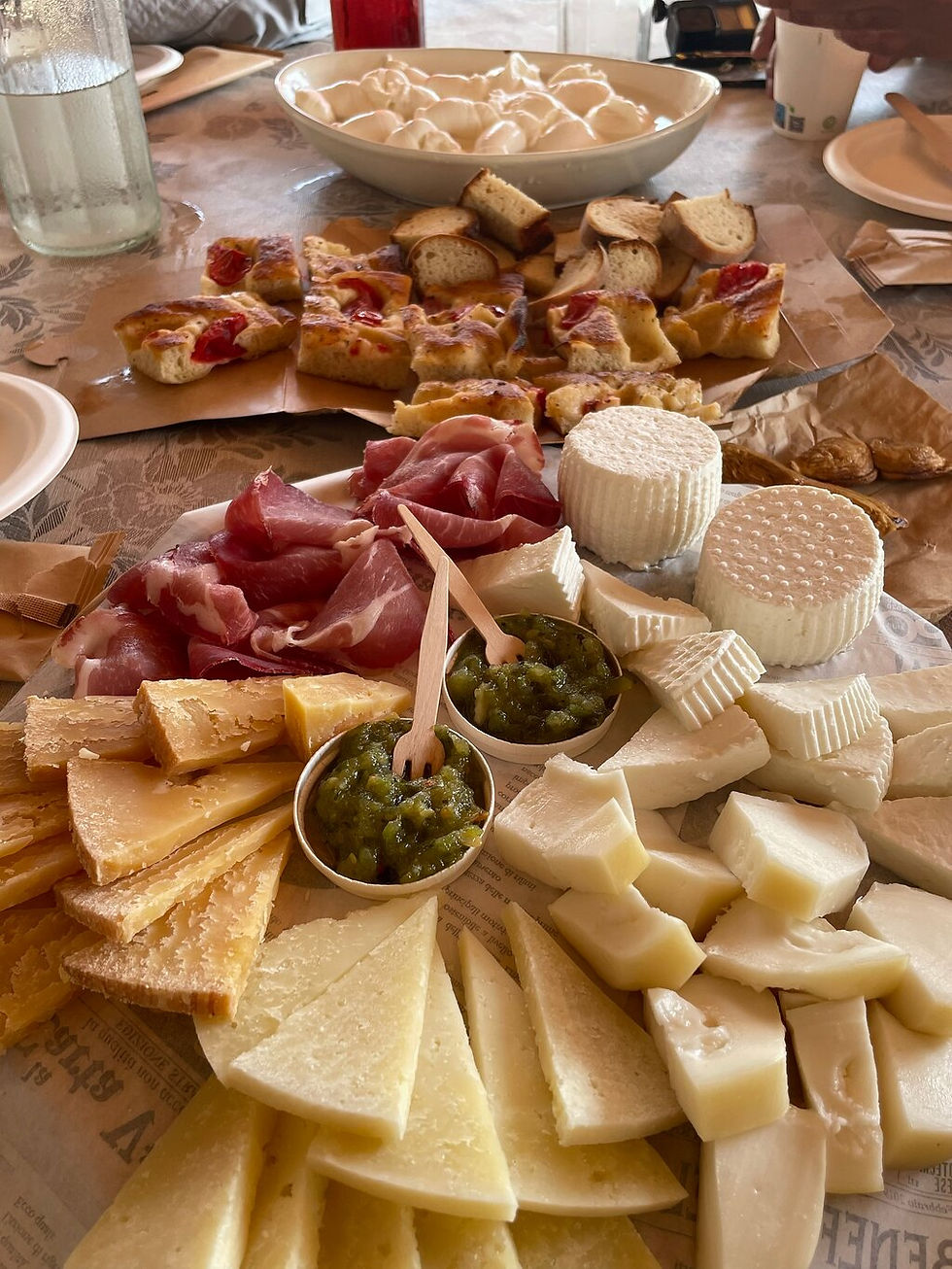
For a balanced tasting, choose four to six cheeses with different textures and levels of intensity rather than filling the board with similar products. Start with delicate fresh cheeses, move towards firmer semi-aged varieties and finish with the strongest flavors.
One possible progression is fior di latte or nodini, burrata, fresh scamorza, young cacioricotta, semistagionato caciocavallo and aged pecorino or canestrato. Ricotta forte, if included, should be tasted last and in a very small amount.
Serve each cheese with a separate knife or spoon when practical, especially creamy cheeses. Plain bread and water help refresh the palate. Keep accompaniments simple so guests can first notice the cheese’s own aroma, texture and flavor.
What to Pair with Fresh Cheeses
Fresh mozzarella and fior di latte are especially enjoyable with ripe seasonal tomatoes, basil and a restrained drizzle of extra virgin olive oil. Burrata and stracciatella pair beautifully with grilled or raw vegetables, bread and the natural sweetness of tomatoes.
Because these cheeses are delicate, avoid overpowering them with strong sauces or too many ingredients. Good bread, local vegetables and quality olive oil are often enough.
Pairings for Scamorza, Caciocavallo and Canestrato
Scamorza works well warmed or briefly grilled, when its texture becomes soft and appealing. Smoked scamorza can complement roasted vegetables or potatoes, while younger caciocavallo is pleasant with bread and vegetable-based antipasti.
More mature caciocavallo, pecorino and canestrato can be served in smaller pieces with rustic bread. Depending on their intensity, they may also work with fruit, a little honey or preserves. The goal is balance: a strong accompaniment should not hide the flavor of the cheese.
Which Puglian Wines Go with Cheese?
Wine pairings depend on the individual cheese, its age and the rest of the meal. Crisp local white wines or rosé can be pleasant with fresh mozzarella and burrata, while more structured reds may suit firmer, mature cheeses.
Puglia offers many possible partners, including wines made from Verdeca, Bombino Bianco, Negroamaro and Primitivo grapes. These are starting points rather than rigid rules: taste the wine and cheese together, and adjust for acidity, saltiness, richness and intensity.
Cheese and Extra Virgin Olive Oil
Extra virgin olive oil is a natural companion to many fresh Apulian cheeses, especially when served with tomatoes or vegetables. A small drizzle can add fruitiness and texture, but too much oil may mask the cheese’s delicate dairy notes.
For a simple comparison, taste a piece of fresh cheese on its own, then try a second bite with a few drops of local extra virgin olive oil. The difference can reveal how two everyday Apulian ingredients complement each other.
Where to Buy Authentic Cheese in Puglia
Look for local caseifici, farm dairies, food markets and reputable specialty shops. Ask what was made that day, which milk was used, whether the cheese is fresh or aged, and how it should be transported. A good producer should be able to explain the product without relying on vague claims of authenticity.
If a cheese carries a protected designation such as Burrata di Andria IGP or Canestrato Pugliese DOP, check the product labeling and certification rather than assuming every similarly named cheese belongs to the protected category.
How to Store and Transport Apulian Cheese
Fresh cheeses are perishable. Follow the producer’s label for refrigeration, use-by dates and any instructions about storage liquid. When traveling, keep chilled products within the temperature range specified by the producer and use suitable insulated transport for the journey.
Aged cheeses may be easier to carry, but storage needs still vary by product and packaging. Ask the seller about vacuum packing, refrigeration and safe transport, especially if you are taking cheese on a long trip or crossing international borders where import rules may apply.
For the best flavor, serve cheese according to the producer’s guidance and avoid leaving perishable products unrefrigerated for extended periods. If in doubt, prioritize food safety over serving traditions.
What to Ask During a Dairy Visit
A visit to a caseificio becomes more meaningful when you ask a few practical questions: Which milk is used? Is the curd stretched by hand? How long has this caciocavallo matured? What changes when scamorza is smoked? Is this canestrato a DOP product or a local variation?
These questions turn a simple purchase into an encounter with local knowledge. They also help visitors understand why cheeses that look similar may taste very different.
Whether you are assembling an antipasto platter or tasting cheese directly at a dairy, choose variety over quantity and let each product tell its own story. In the final section of this guide, we will explore authentic cheesemaking experiences in Puglia and answer common questions travelers ask before visiting.
Visit a Caseificio: Discover Apulian Cheese at Its Source
One of the most rewarding ways to understand the cheeses of Puglia is to visit a working caseificio or masseria where dairy traditions are still part of everyday life. Watching curd being stretched, learning why a cheese is salted or aged, and tasting it close to where it was made brings the region’s food culture into focus.
What Happens During a Cheesemaking Experience?
The format depends on the producer. Some visits focus on observing cheesemakers at work; others include a guided tasting, an introduction to the milk and production process, or a hands-on demonstration. Not every dairy offers visitor activities, and access to production areas may be limited by hygiene and operational requirements.
Ask in advance which cheeses will be demonstrated, whether English-language guidance is available, how long the visit lasts and whether tasting is included. Morning visits may be particularly interesting at dairies that produce fresh cheese early in the day, but schedules vary.
Cheese Traditions Across Puglia
Andria is closely associated with Burrata di Andria IGP, while Gravina in Puglia is known for Pallone di Gravina. In the Daunia area, traditions linked to Podolica cattle contribute to the region’s caciocavallo culture. Across the Valle d’Itria and Salento, local dairies offer opportunities to discover fresh cheeses, ricotta, cacioricotta and regional variations.
These associations are useful starting points, not a guarantee that a particular dairy is open to visitors. Contact producers directly or arrange a visit through a local experience provider before traveling.
Make Cheese Part of a Broader Food Experience
Cheese tasting fits naturally into a day exploring Puglia’s food traditions. Combine a dairy visit with a local market, a traditional lunch or a hands-on cooking experience to understand how cheeses appear in everyday dishes. Burrata with tomatoes, cacioricotta grated over pasta and a piece of mature caciocavallo at the end of a meal each reveal a different culinary role.
With Senti La Puglia, you can discover cheesemaking traditions through our Cheese Making Experience in a local masseria. The experience offers an opportunity to see how traditional cheeses are made and enjoy a tasting of products from the masseria, connecting the production process with the flavours of the countryside. Check the experience details and availability before booking.
Which Puglian Cheeses Should You Try on Your First Visit?
If you are visiting Puglia for the first time, start with a few contrasting cheeses rather than trying everything at once. These six choices make a memorable introduction to the region’s dairy traditions:
Fior di latte or fresh mozzarella — mild, milky and soft; look for it in a local caseificio and enjoy it as fresh as possible. Burrata — rich and creamy, with a stracciatella filling; try it with tomatoes and good bread. Stracciatella — the spoonable mixture of cheese strands and cream; delicious on toasted bread. Scamorza affumicata — gently smoky and firmer; ask for a slice to grill. Caciocavallo — choose a young version for a buttery taste or a more mature one for deeper savory notes. Cacioricotta — a traditional choice to grate over tomato-based pasta or vegetables.
At a market or dairy, ask what was made locally that day, which cheeses are freshest and which are best eaten immediately. If you are staying near Ostuni, the Saturday market and local caseifici are useful places to begin. Availability varies by producer and season; follow the cheesemaker’s storage advice, especially when traveling.
Frequently Asked Questions About Puglian Cheese
What is the most famous cheese from Puglia?
Burrata is among Puglia’s best-known cheeses internationally. Burrata di Andria IGP is a protected regional specialty, but the region also has important traditions of mozzarella, caciocavallo, scamorza, cacioricotta and other cheeses.
Is burrata the same as mozzarella?
No. Both use stretched-curd techniques, but burrata has a pouch of stretched curd filled with strands of cheese and cream. Mozzarella is a fresh stretched-curd cheese without that creamy filling.
What is the difference between stracciatella and burrata?
Stracciatella is a mixture of torn cheese strands and cream. It is commonly used as burrata’s filling and can also be purchased separately.
Is all burrata made in Andria?
No. Burrata is made in different places. Burrata di Andria IGP is the specific protected designation, subject to its production rules; the generic name burrata does not automatically indicate that certification.
What is cacioricotta used for?
Young cacioricotta can be enjoyed at the table, while firmer, dried versions are often grated over pasta, especially dishes with simple tomato sauces.
Can I visit a cheese dairy in Puglia?
Some dairies and farms welcome visitors for demonstrations or tastings, often by arrangement. Contact the producer or an experience organizer in advance to confirm opening times, languages, accessibility and what is included.
Which Apulian cheese should I try first?
For a gentle introduction, start with fresh fior di latte or mozzarella, then try burrata or stracciatella. Move on to scamorza, caciocavallo and aged sheep’s-milk cheeses as you explore stronger flavors.
Can I bring Puglian cheese home after my trip?
That depends on the product, travel duration and destination. Follow the seller’s food-safety advice and check the rules of the country you are entering, especially when traveling outside the European Union.
Explore More of Puglia’s Food Traditions
Cheese is only one expression of the region’s food heritage. Discover how handmade pasta, extra virgin olive oil, seasonal vegetables and local wines come together in the everyday cooking of Puglia. For a fuller picture, continue with our guides to traditional Apulian food, burrata and olive oil in Puglia.
Experience the Flavors of Puglia
The best way to appreciate Apulian food is to meet the people who make it, hear their stories and share what they prepare. Discover Senti La Puglia’s authentic food and cooking experiences, or contact us to discuss an experience that fits your interests and travel plans.


Comments