.png)


Traditional Instruments of Pizzica: The Sounds That Bring Puglia to Life

Updated: Aug 25
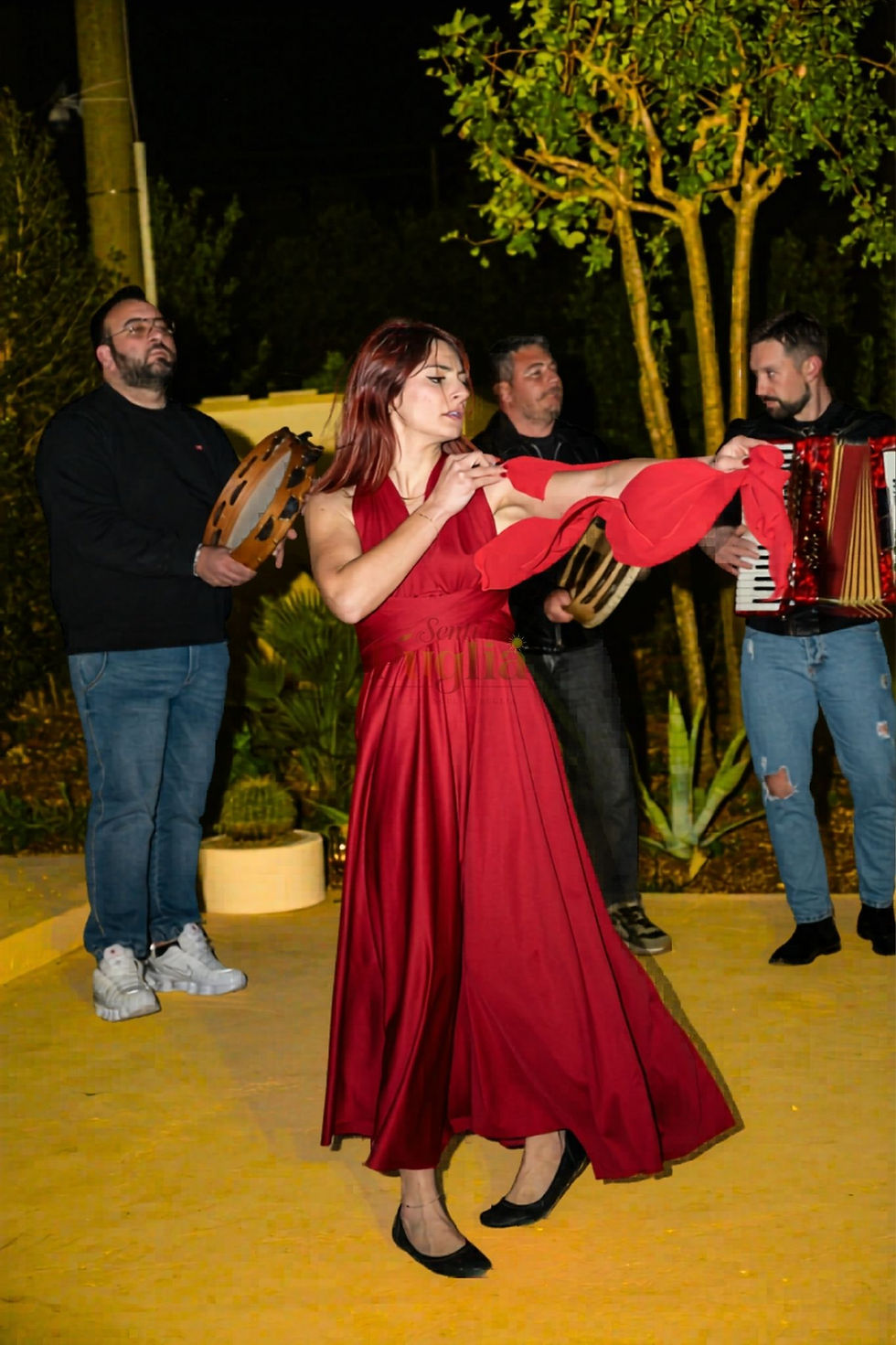
When people first experience Pizzica, they are often captivated by the dancers. But behind every movement is something just as important: the music.
The unique sound of Pizzica is created by a combination of traditional instruments that have accompanied celebrations, festivals and community gatherings in Puglia for centuries.
Together, they create the powerful rhythm and emotion that make Pizzica one of Italy's most captivating folk traditions.
Traditional instruments of pizzica:
The Tamburello: The Heartbeat of Pizzica
The tamburello (Italian frame drum) is undoubtedly the most iconic instrument of Pizzica.
Played with fast, energetic rhythms, it provides the pulse that guides both dancers and musicians.
Its distinctive sound is instantly recognizable and has become one of the defining symbols of traditional music in Salento.
Without the tamburello, Pizzica would lose much of its unique energy.
The Violin
The violin adds melody, emotion and expression to the music.
While the tamburello establishes the rhythm, the violin creates the musical dialogue that accompanies the dancers' movements.
Its expressive sound allows musicians to improvise while maintaining the traditional character of the dance.
The Accordion
The accordion enriches the music with harmony and depth.
It supports both the melody and the rhythm, creating the warm and vibrant atmosphere that characterizes many traditional Pizzica performances.
Today, the accordion remains one of the most common instruments used during festivals and cultural events throughout Puglia.
The Guitar
The acoustic guitar provides the harmonic foundation of the ensemble.
Although less prominent than the tamburello, it connects the rhythm and melody, giving balance to the music while supporting the other instruments.
Its role is subtle but essential.
The Mandolin
The mandolin adds bright, delicate tones that enrich traditional arrangements.
Although it is not always present in every performance, it remains an important instrument within Southern Italian folk music and is sometimes featured in traditional Pizzica ensembles.
Other Traditional Instruments
Depending on the local tradition and the musicians performing, other instruments may also appear, including:
Organetto (diatonic button accordion)
Flute
Bagpipe (Zampogna)
Castanets in some local traditions
Each ensemble reflects the rich musical heritage of Southern Italy while preserving the authentic spirit of Pizzica.
Why Live Music Makes Such a Difference
Watching Pizzica performed with recorded music can be enjoyable.
Experiencing it with live musicians is something entirely different.
The interaction between musicians and dancers creates an atmosphere that cannot be replicated by a recording.
Every performance becomes unique, shaped by improvisation, rhythm and the shared energy of everyone involved.
At Senti La Puglia, we believe that authentic culture is best experienced in person.
Our Pizzica experiences combine traditional dance with live music, allowing visitors to discover not only the movements but also the sounds that have defined this tradition for generations.
Whether you join one of our public experiences or book a private workshop, you'll experience the rhythm, emotion and authenticity of Puglia's musical heritage.
Ready to experience authentic Pizzica?
Explore our Pizzica Dance Class and discover the sounds that bring Southern Italy to life.
Feel the Soul of Puglia. ❤️
Written by: Senti La Puglia
(Fabiano Semeraro & Silvia Calamo
Local hosts passionate
about preserving Puglia’s traditions
through authentic cultural experiences.)
Related Articles


Comments